Before Thatcher, the trade unions had an almost complete control over the economy. The winter before her premiership it became apparent it was a death grip. Strikes ground the country to a halt, hospitals were closed, ambulances shut down, even the dead started piling up until union gravediggers received a pay raise. It was called the "Winter of Discontent". With wages unchecked, inflation was uncontrollable.
Her party was elected to end this, and she did. Margaret Thatcher not only took on the trade unions but did so with remarkable political intelligence. She acted incrementally, avoiding the all-out conflict that had brought the previous government down, but by the end all the most egregious of trade union practices, closed shops, secondary actions, or strikes called without a ballot were stopped.
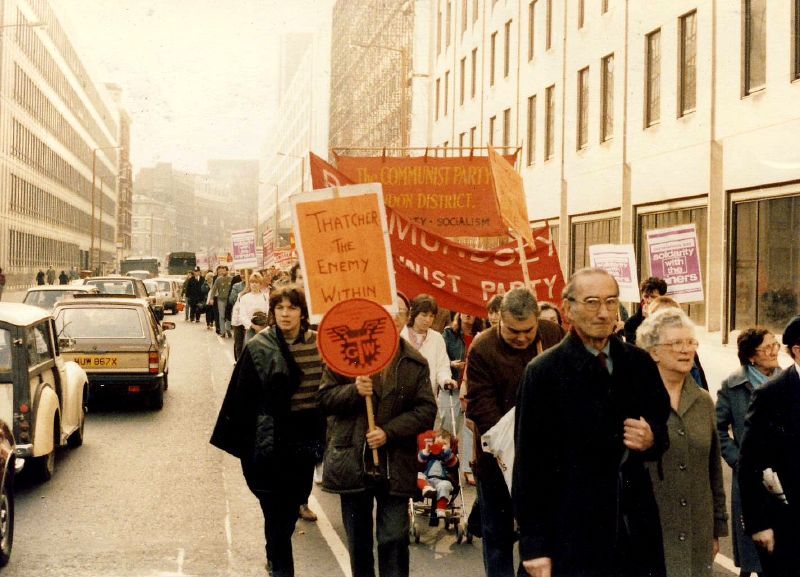 |
| "Thatcher The Enemy Within" Striking Coal Miners, London, '84 |
Violent clashes between police and strikers broke out, most notably The Battle of Orgreave where picketers were determined to keep British Steel plants from being resupplied with coal. In '84, after two NUM members killed a taxi driver with a cinder block for driving a strike breaker to work, public sympathy was exhausted. The strike was broken.
But, as Megan McArdle writes about, you have to
quoting extensively from Orwell on the conditions of the coal mines before nationalization. It was brutal, dangerous, and physically degrading. It was the combination of the risk of death with the certainty of slow degradation all for little pay. When you think of the conditions that NUM had fought against before, the militancy of the coal miners becomes more understandable.
It was Thatcher, though, that brought this system to the end. The continued subsidization of the coal industry meant the promotion of an industry that was inherently destructive and increasingly profitless at the expense of what would become the modern British economy, an economy where work is not a synonym for agony.
There's this idea that economic growth is jobs paying more. It's more the destruction of jobs, being replaced by better ones.
Prosperity is not simply more coal.
She ground inflation back under control raising, interest rates and increasing taxes in the middle of a recession. It was brutal: industry shed jobs and unemployment went over two million. The leader of her party suggested she resigned, she kept on: "the lady's not for turning".
It's also a reminder the forces that do the most to reduce poverty often fall the hardest on the poor. They are what is being reduced. This is what Margaret Thatcher deserves to be remembered first. Economic prosperity is not some abstract thing, it doesn't just mean more things to afford, it also means a less brutal existence for those trying to get by, and Margaret Thatcher did more than any other Prime Minister improve the conditions of working people in the UK. . But for those at the bottom at the time, the costs were high.
